|
|
|
|
Ordering
To
order click on the "shopping cart" button next
to the item you wish to buy. If you want more than one item
you must click the shopping cart button multiple times.
Each click represents one item. Click on the "View
Cart" button on the side bar to check your total or
change your order. Shipping & Handling charges for the
continental United States are based on your total purchase
and automatically added to your total. If you live outside
the continental United States please e-mail our office for
a shipping & handling quote; please include a list of
the supplies you wish to order in your e-mail. On-line payment
is via PayPal.com and is very secure. Follow their directions
when you checkout. Your order will be sent to us via e-mail
and processed the following business day. You will be notified
by e-mail when your order has been shipped. In order to maintain reasonable pricing, all orders are
final; we do not accept returns or refunds.
Important ordering information:
To avoid processing delays on the PayPal web site, you MUST
be registered with PayPal. If you are not already a PayPal
member please follow the specific registration directions
on the PayPal web site; there is no charge for registering.
We ship most of our orders US Priority
Mail. Enter your US Postal address under "shipping
address" NOT a UPS or FedEx address. Occasionally large
or heavy orders are shipped with a different carrier (UPS
or FedEx). If we plan to ship your order via UPS or FedEx,
we will e-mail you to request and verify your shipping address.
Building YOUR First Aid Kit
Whether you are traveling
alone, taking part in an expedition, or responding as a
member of a search & rescue (SAR) team, you will need
a first aid kit. What you should take and how you should
package it depends on many things. Here are a few basic
concepts that you will need to know in order to begin building
your kit. Click on linked items for detailed description
and cost. For best viewing open your browser window to its
fullest.
There is no generic first aid kit. The type activity
or expedition defines the amount of weight and space available
for your kit (e.g.: a sailboat can usually carry more than
a raft and a raft can carry more than a climber etc.). The
longer you are from "help" generally the bigger
your first aid kit will be; consider resupply(s). The level
of training of the medical "officer" will limit
how much invasive equipment or Rx drugs you can carry.
|
|
|


|
|
|
|
| |
|
Examine the
medical history of each expedition or team member; you may
need to add special equipment or drugs to your kit. Pay
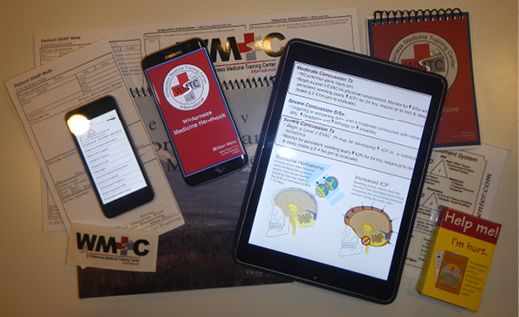
attention to any allergies. If your experience in wilderness medicine is limited,
look over our publications and consider carrying the Wilderness Medicine Handbook.
You should also consider using our Weatherproof Patient SOAP Notes or our Reusable
Patient SOAP Notes to thoroughly document your assessment
and treatment.
First aid kits used by expeditions
are conceptually very different from those used by rescue
teams. Expeditions hope that they will NOT use their first
aid kits and adhere to the principles of improvisation:
they limit specialized items, focus on multipurpose equipment,
and adapt expedition gear for medical uses (splints or litters).
As your ability to improvise increases, the size of your
expedition first aid kit decreases. Rescue teams know they
WILL use their equipment and often carry specialized gear
with them rather than scavenging their personal gear for
improvisation.
Packaging is extremely important.
Well thought out organized packaging protects valuable and
irreplaceable equipment. It permits fast and easy access
to emergency gear without "vomiting" kit contents
everywhere. Critical concepts to organization and packaging
are:
- Use different colored compartments or
packs. DO NOT use plastic bags as pack or compartment
substitutes.
- Clearly label each compartment or pack:
In many expeditions each expedition member carries their
own personal care kit (blisters, sun screen, OTC meds,
personal Rx meds, minor cuts & scrapes, etc.) leaving
the expedition first aid kit for emergencies and minor
trauma (more serious wounds and unstable injuries). This
helps ensure that the expedition first aid kit is complete
when it is needed.
- Laminate a contents list for each pack
and indicate the intended use for each item.
- Seal soft goods in plastic to protect
them from moisture. Use individual mini zip-locks or "Seal-a-Meal"
freezer type packages.
- Tubes break. Repackage ointments into
one and two ounce wide mouth (or larger depending on group
size) Nalgene bottles.
- Liquids leak. Package liquids in one and
two ounce narrow mouth (or larger depending on group size)
Nalgene bottles.
- Use a weatherproof drug log for ALL medications
so that you know who is using them and why.
- Train your expedition or team members
to use your kit. Until they are trained only you know
why you assembled the kit as you did. Without specific
training most people will not know how to use the equipment
you have so thoughtfully assembled. Restrict access to
compartments or packs that members are not trained to
use.
back
to top
Possible
Problems & Solutions
An effective first aid kit is built from a comprehensive
possible problem list. Divide your list into Basic Life
Support or Trauma, Environmental, and Medical problems.
Choose the problems that you will likely encounter (rule
out zebras) and prioritize them. Once you are satisfied
with your possible problem list, compile a list of first
aid supplies needed to treat them; carry more of the stuff
that you WILL need. A basic check list for many possible
problems and first aid supplies follows; use it as a guide.
|
| Basic
Life Support or Major Trauma
Possible Problem = Respiratory
Arrest
~ Mask or face shield
Possible Problem = No
Pulse
~ AED (useful only if ALS is within hours)
Possible Problem = Severe
Bleeding
~ Trauma scissors
~ Trauma gloves
~ Trauma dressings (maxi-pads, diapers)
~ Elastic wraps,
coban (vet wrap)
for pressure bandages
|
Possible Problem = Vomiting
~ 60 cc suction
syringe & tube
Possible Problem = Unstable
Spine Injury
~ SAM splint
(for improvised C-collar)
~ Improvise a backboard or litter from expedition
equipment.
Possible Problem = V,
P, or U
~ Emergency Action Plan
~ Cell phone, radio, or satellite phone |
|
| back
to top |
| |
| back
to top |
Environmental
Possible Problem = Hypothermia
~ Hypothermia thermometer
~ Space blanket
or space bag
for inner vapor barrier of hypothermia package
~ Improvise hypothermia package & heat packs
(hydropacks, water bottles, etc.) from expedition
equipment
Possible Problem = Heat Stroke
~ Mist bottle for cooling in arid climates
~ Digital thermometer
Possible Problem = Heat Exhaustion & Dehydration
~ WHO Oral Rehydration
Solution
Possible Problem = Sunburn
~ Sun block
~ Aloe Vera & Vitamin E gels
Possible Problem = Second Degree Thermal Burns
~ Silver sulfadiazine ointment (Rx) or White
Petroleum Jelly |
~
Tegaderm micro
thin film dressing
~ Roller gauze
for dressings
~ Coban for holding
dressing in place
Possible Problem = Ingested Toxins
~ Activated charcoal slurry
Possible Problem = Allergies
~ Epinephrine (Rx) & oral antihistamine
Possible Problem = Poison Ivy, Oak, & Sumac
~ Pre-exposure lotion
~ Technu Oak &
Ivy Cleanser (post-exposure soap)
~ Hydrocortisone cream (treatment)
Possible Problem = Acute Mountain Sickness
~ Gamow bag
~ Herbs: Ginko biloba
~ Rx Drugs: acetazolamide, dexamethasone, &
nifedipine |
|
| back
to top |
Medical
Possible Problem = Disease
~ Disease specific Rx antibiotics & antimicrobials
~ Grapefruit Seed Extract
~ Disease specific herbs
Possible Problem = Diabetes
~ Glucose paste (OTC)
~ Glucagon injections (Rx)
Possible Problem = Asthma
~ Rx medication (oral, inhalers) & injectable
Epinephrine (Rx)
Possible Problem = Water Treatment
~ Boiling
~ Filter |
~
Iodine or two part chlorine tablets
~ Grapefruit Seed Extract
Possible Problem = Ears
~ Irrigation syringe
~ Vinegar or Rx antibiotic drops
Possible Problem = Eyes
~ Irrigation syringe
~ Rx antibiotic ointment
~ herbal wash
Possible Problem = Teeth
~ Cavit (temporary
filling without Oil of Clove)
~ DenTemp (temporary
filling with Oil of Clove)
~ Oil of Clove
(pain relief)
|
|
| back
to top |
|
|
|
|
|
|
|
|
|
|
|
|
|
|
WMTC
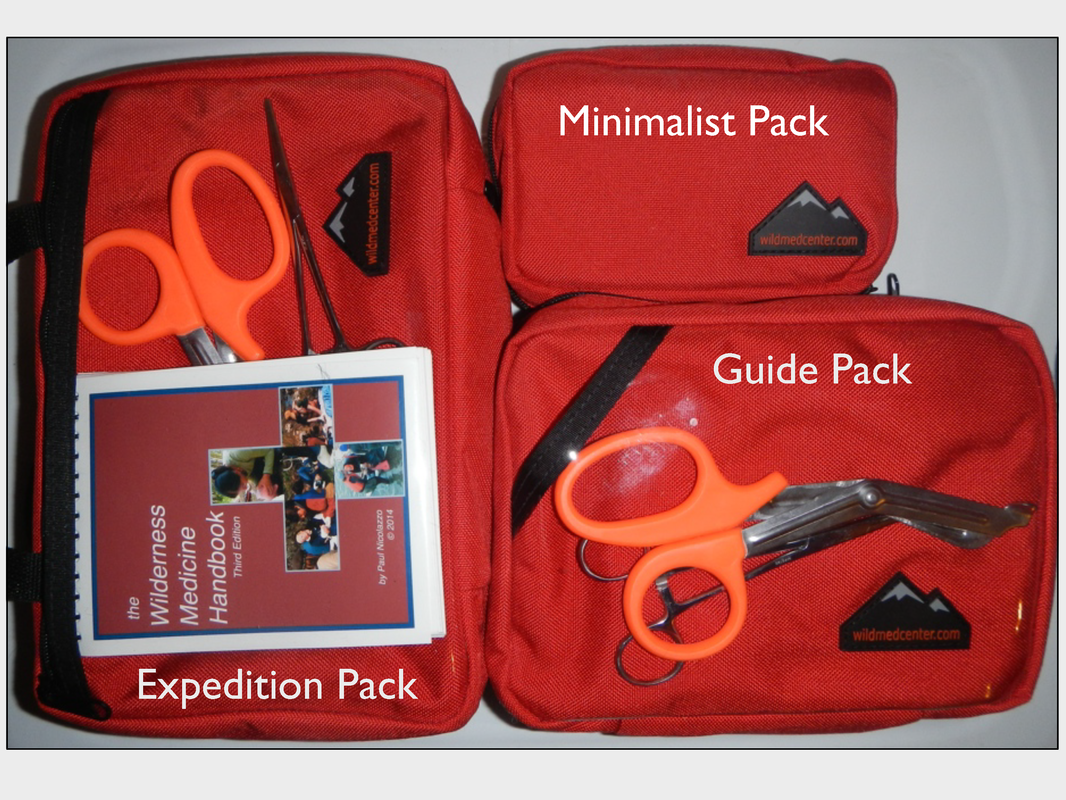
designed Packs
All our packs are made from
cordura and other top quality materials; all seams are rolled
or taped. All our packs have undergone many years of design,
rigorous testing, and redesign for function and durability.
They are made exclusively for us by Misty Mountain Manufacturing in Seattle, WA. You will be pleased with their look, construction, and durability; they will last for years and years.
Our modular system of packs
and velcro tech-fabric let's you to decide how you want to
organize your first aid kit. Our system permits color coding,
rapid access, and protects gear and soft goods that are not
currently in use from damage while other parts of the kit
are being used. For a minimal fee the Wilderness Medicine
Training Center will assist you in designing a first aid kit
for your organization or expedition. A description
of each individual pack follows.
|
|
|
|
|
back
to top
|
|
|
|
|
the BLS
Pack
BLS stands for Basic Life Support. The BLS Pack is designed to hold all the equipment that you need NOW. Combined with the blue Medical Pack and inside the Backpack you have almost instant access to the stuff you need when faced with immediate trauma. Open the Backpack, grab the BLS Pack, and GO! The
outside of our red BLS Pack (144 cubic inches) has a single
clear vinyl slash pocket that allows quick access to a pair
of trauma scissors. The main body of the pack unzips on three
sides to completely expose a series of pockets on one side
and high-tech velcro fabric on the other. You can choose from
two different sizes of elastic loops that velcro onto the
velcro tech-fabric to customize the interior of the pack.
For those going "very light" the BLS Pack can
be used solo. The pack comes with three velcro strips (two
4 loop and one 3 loop). Red only.
| BLS Pack: $25
|
|
|
|
|
|
|
|
back
to top
|
|
|
|
|
the Medical
Pack
The
outside of our red or blue Medical Pack (220 cubic inches)
has a zippered clear vinyl pocket on one side and a zippered
bellows pocket on the other. Inside both sides are lined with
high-tech velcro fabric; use elastic loop velcro strips and pockets to
organize drugs, herbs, ointments, and soft goods. Combine it with the BLS Pack for larger expeditions or use it by itself
for solo trips or small/short expeditions. River Runners take
note: our medical pack fits snugly into a standard ammo can
with enough room left over for sunscreen or a camera. The
pack comes with three velcro strips (two 4 loop and one 3 loop
strips), a mesh pocket, and a cordura pocket. Red or Blue.
| Red
Medical Pack $35 |
|
| Blue Medical
Pack $35 |
|
|
|
|
|
|
back
to top
|
|
|
|
|
Accessories
While all our packs come with velcro strips and/or pockets you may need
more.
| |
Three Loop Velcro
Strip: $1.50 |
|
Cordura
Pocket: $3 |
|
|
Four Loop Velcro Strip:
$1.50 |
|
Mesh Velcro Pocket: $3
|
|
|
|
|
|
|
back
to top
|
|
|
|
|
First
Aid Supplies
After much thought, and a lot of requests from our students,
we decided to offer selected first aid supplies. We sell ONLY
what we are willing to (and do) carry ourselves; Some of the
items are difficult to find elsewhere. All the first aid supplies
listed below are the best combination of quality and value
available; they are priced competitively.
We do NOT sell over-the-counter medications (OTC) that are
easily available at your local drug store. Nor do we sell
prescription drugs or herbs.
|
|
|
|
|
back
to top
|
|
|
|
|
WMTC
T-shirt
WMTC
cotton logo T-shirts are strong and durable with the WMTC logo printed on the back across the shoulders and over your heart on the front. In a pinch
you can spiral-cut to form a long cloth roll for use with
a SAM splint. Splints wrists, forearms, ankles, and knees
in style and comfort. Sizes are XL, L, M, and S
| |
Small WMTC
T-shirt: $12 |
|
| |
Medium WMTC
T-shirt: $12 |
|
| |
Large WMTC
T-shirt: $12 |
|
| |
X-Large WMTC
T-shirt: $12 |
|
|
|
|
|
|
|
|
|
back
to top
|
|
|
|
|
WMTC
Baseball Cap
WMTC
Baseball Caps feature a navy blue brim and trim, a khaki body, and, of course, the WMTC logo. One size fits all by using the adjustable leather band and brass buckle. VERY cool.
| |
WMTC
Baseball Cap: $20 |
|
|
|
|
|
|
|
|
back
to top
|
|
|
|
|
Gloves
Trauma gloves are heavier than exam gloves and designed for
use in difficult conditions. Trauma gloves are the gloves
you should use when responding to a scene. Lighter weight
exam gloves are useful for wound cleaning in a more controlled
setting. We suggest packing your gloves in recycled
film canisters to prevent UV deterioration. We sell only synthetic
gloves made from chloroprene. Chloroprene is both stronger
and lighter than latex and is unaffected by heat or cold.
| |
4 pair Small Trauma
Gloves: $6 |
|
4 pair Small Exam Gloves:
$3.00 |
|
| |
4 pair Medium Trauma Gloves:
$6 |
|
4 pair Medium Exam Gloves: $3.00
|
|
| |
4 pair Large Trauma Gloves:
$6 |
|
4 pair Large Exam Gloves: $3.00
|
|
| |
4 pair X-Large Trauma Gloves:
$6 |
|
4 pair X-Large Exam Gloves: $3.00
|
|
| |
|
|
|
|
|
|
|
|
|
back
to top
|
|
|
|
|
Pocket
Masks & Shields
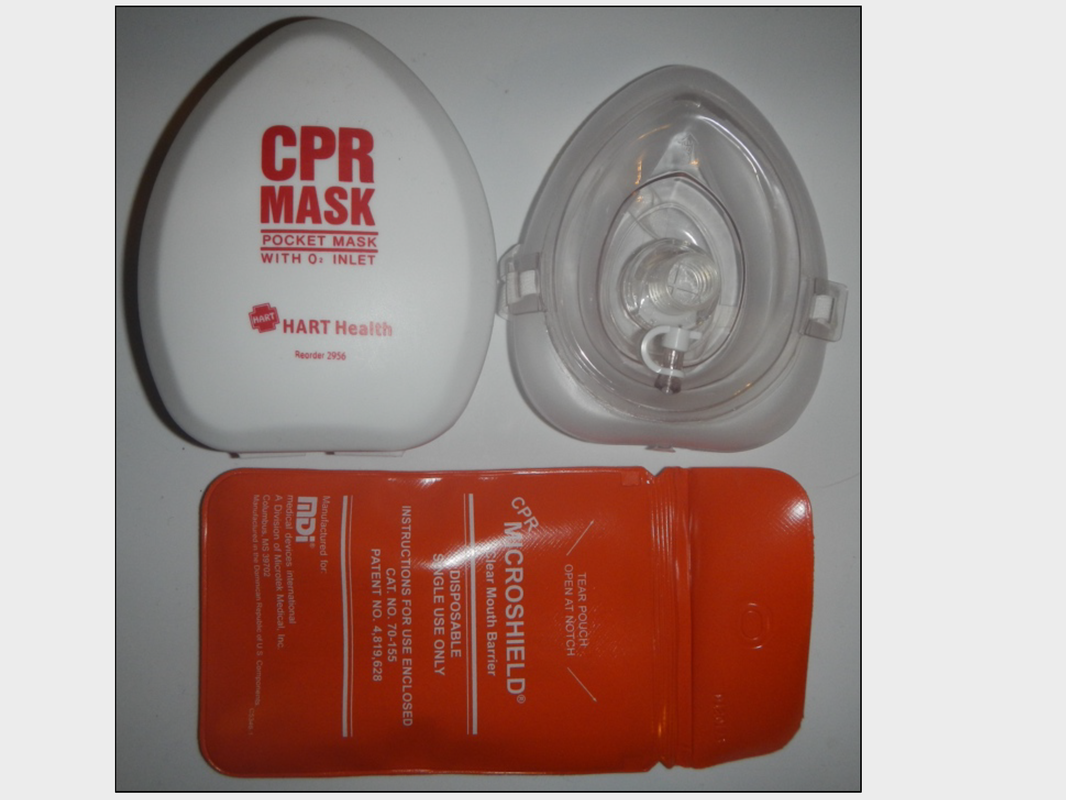
Pocket
face masks offer more protection than face shields at the
expense of size and weight. Our pocket masks are made from
soft plastic and come with a hard plastic case. Our face shields
come in a sealed heavy plastic envelope.
| |
Pocket Mask:
$15 |
|
|
|
| |
Face Shield:
$10 |
|
|
|
|
|
|
|
back
to top
|
|
|
|
|
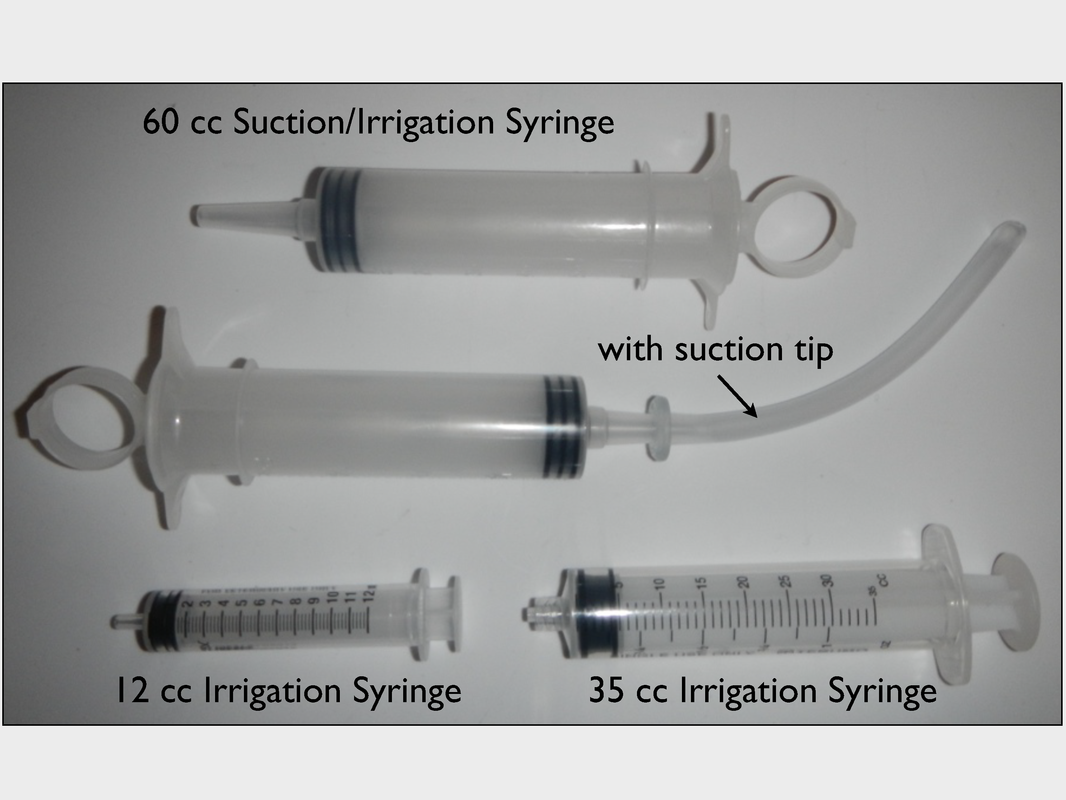
Syringes
Often
hard to find, we offer two types of syringes. For multiple
uses choose our 60 cc suction syringe and flexible 3 inch
extension tube. Use it for suction, irrigating wounds, eyes,
or ears...and for enemas. Choose between a long or short tip;
the short tip fits easily into our BLS Pack; both fit into
the Medical Pack. The smaller 35 cc irrigation syringe is
designed for irrigating wounds, eyes, and ears; it fits easily
into our BLS Pack.
| |
Long Tipped
60 cc Suction Syringe & Tube: $3.50 |
|
| |
Short Tipped 60 cc Suction
Syringe & Tube: $4.00 |
|
| |
35 cc Irrigation Syringe:
$2.25 |
|
|
|
|
|
|
back
to top
|
|
|
|
|
Trauma
Scissors
Lightweight,
functional, and inexpensive these scissors will cut through
all types of clothing (including leather) for fast access
to bleeding wounds. They fit snugly in the clear vinyl slash
pocket of our Trauma Sub-Pack.
| |
Trauma Scissors:
$5 |
|
|
|
|
|
|
|
|
|
back
to top
|
|
|
|
|
Wound
Cleaning
Supplies
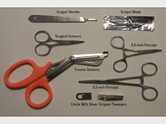
While
a Leatherman or Swiss Army Knife goes a long way towards improvising
first aid tools (especially the scissors) scalpels and mosquito
forceps can be very useful. While inexpensive these steel
tools offer excellent quality and pack easily into the zippered
vinyl pocket on our Medical Pack.
| |
Scalpel
Handle: $4 |
|
|
|
|
|
5
Scalpel Blades: $3 |
|
|
|
|
Forceps:
$5 |
|
|
|
|
|
|
|
back
to top
|
|
|
|
|
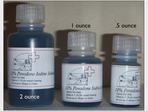
PI
Solution (10% povidone-iodine)
When
diluted to less than 1% povidone-iodine is widely accepted
as a excellent final pressure flush for high-risk wounds or
wound packing. It can also be used to purify water for drinking;
use 4-6 drops per liter and wait 30 minutes. Filter dirty
water before treating. Wait one hour if the water is cold.
We repackage a 10% PI solution into one, two, or four ounce
narrow mouth nalgene containers.
| |
One Ounce PI
Solution: $3 |
|
|
|
|
|
Two Ounce PI Solution: $4
|
|
|
|
|
Four Ounce PI Solution:
$5 |
|
|
|
|
|
|
|
back
to top
|
|
|
|
|
SAM
Splint
SAM
Splints are made from padded aircraft aluminum; they are the
lightest and most versatile splint on the market. Combined
with a cloth spiral strip cut from a T-shirt or sweat shirt
(or a few rolls of Coban) they make an excellent "cast"
for fingers, toes, wrists, forearms, ankles, and knees. SAM
Splints can also be molded into an effective cervical collar.
They are cut easily with a pair of trauma scissors.
| |
SAM Splint:
$15 |
|
|
2” Coban: $4 |
|
|
|
|
|
|
|
|
|
back
to top
|
|
|
|
|
Thermometers
Useful
for taking core temperatures under extreme environmental conditions
or for assessing some medical problems we offer two types
of thermometers; each comes with its own case. A digital thermometer
for hot or warm climates and a special glass mercury hypothermia
thermometer for cold climates (86-100 degrees F).
| |
Digital Thermometer:
$9 |
|
|
Mercury Hypothermia
Thermometer: $10.50 |
|
|
|
|
|
|
|
|
|
back
to top
|
|
|
|
|
|
Soft
Goods
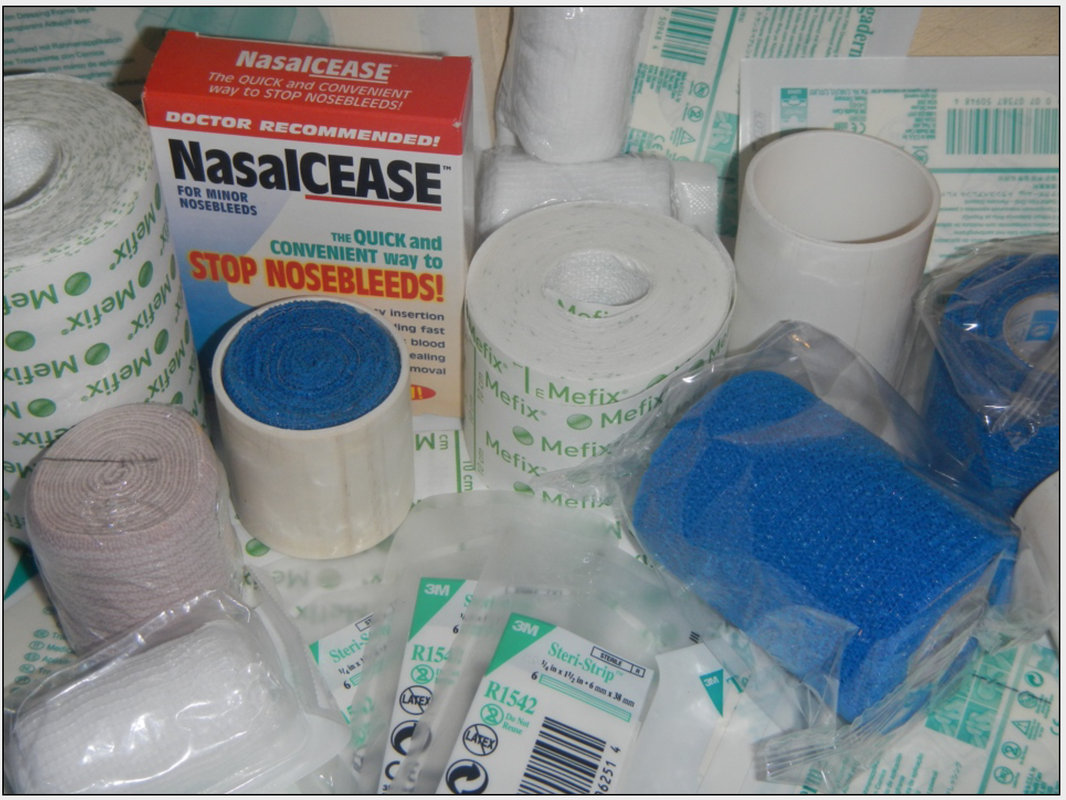
Some
soft supplies are helpful: elastic wraps for pressure bandages,
roller gauze for dressings, cloth tape for dressings, bandages,
and splints, and second skin for blisters. Coban can be used
with a SAM Splint for improvising a "cast" without
cutting a shirt; it cannot be reused. One to two rolls of
Coban are needed for an effective splint. Coban also doubles
as an effective pressure bandage and short pieces may be used
to hold dressings in place. We also sell Tegaderm, a micro
thin film dressing that provides a clear protective dressing
for clean lacerations as it promotes healing. The dressing
is self-adhesive, waterproof, and invaluable for those traveling
in wet environments.
We do not sell bandaids, gauze
pads, or trauma dressings. Gauze can be made from roller gauze
and bandaids can be improvised with gauze and tape. Trauma
dressings can be improvised and cheaply purchased by using
maxi-pads or disposable diapers.
| |
2” Elastic
Wrap: $1.75 |
|
|
2” Sterile Roller
Gauze: $1 |
|
|
1” Cloth Tape: $1.75
|
|
|
2” Coban: $4 per
roll |
|
|
4” x 4.5“ Tegaderm:
$4 |
|
|
|
|
|
|
|
|
back
to top
|
|
|
|
|
Space
Blanket & Bag
Developed
years ago from space technology, rescue (or space) blankets
and bags are made from reflective lightweight mylar plastic.
Both the blanket and bag come pre-folded. They are designed
to reflect and contain body heat and are perfect for the inner
vapor-barrier of a hypothermia package. Both are radar reflective
and remain flexible to - 40 F. Because it is completely sealed,
the bag offers more protection than the blanket. The blanket
measures 56 x 84 inches. The bag is 36 x 84 inches.
| |
Space Blanket:
$8 |
|
|
Space Bag: $12 |
|
|
|
|
|
|
|
|
|
back
to top
|
|
|
|
|
Blisters
Friction Blisters are the bane
of backcountry travelers everywhere. Most can be prevented
with good footwear, two socks, and foot hygiene. Additional
protection can also come from painting blister prone areas
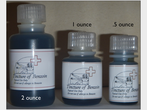
and "hot spots" before they blister with Tincture
of Benzoin and cover with a porus cloth tape. Tincture of
Benzoin is an alcohol based plant product that helps tape
adhere at the same time it toughens and protects your skin.
We repackage Tincture of Benzoin in one, two, and four ounce
narrow mouth round Nalgene bottles.
If you already have a blister
and want to continue hiking: remove the cover and clean thoroughly.
Then apply Second Skin over the wound and under the bandage
for protection and pain relief. There are two 3 inch by 6.5
inch sheets per package.
ENGO, using ShearBan technology, is the ultimate in
blister prevention and treatment. ENGO is made from teflon
and reduces 80% of the shear forces that cause friction blisters.
We've field tested it for the past two years and found it
to be amazing. If you have chronic problems with blisters,
you need ENGO. It has a self-adhesive backing and may
be applied to directly to your boot or to the
inside of your outer sock. To apply to a sock: turn the sock
inside out and place on the opposite foot, stick a ENGO
patch to the injured area, turn the sock right side out and
place on the injured foot over the liner sock. It will remain
in place for weeks; even through gentle washing! Simply peel
off to remove. ENGO is available in two 4 x 6 inch sheets per package
| |
1 oz Tincture
of Benzoin: $6 |
|
|
2 oz Tincture of Benzoin:
$10 |
|
|
4 oz Tincture of Benzoin:
$16 |
|
|
Second Skin: $12 |
|
|
Two 4 x 6 inch ENGO Sheets: $14 |
 |
|
|
|
|
|
|
|
|
back
to top
|
|
|
|
|
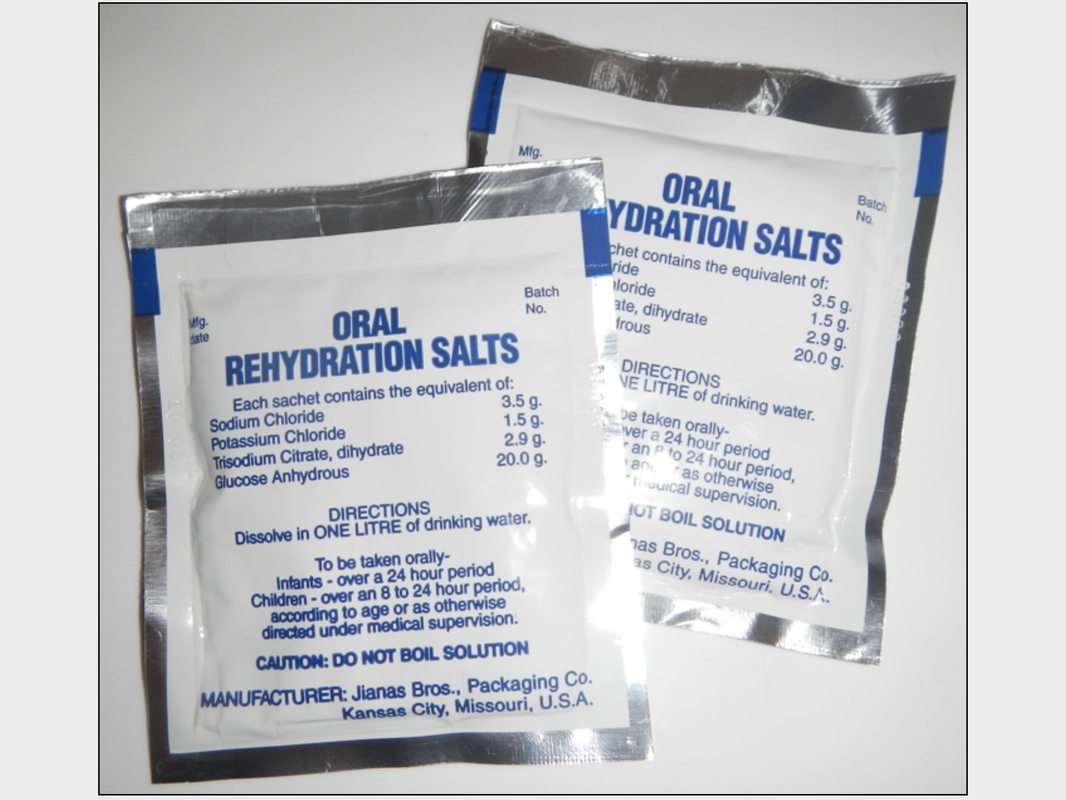
WHO
Oral Rehydration Solution
Electrolyte loss, especially
sodium, is responsible for a general feeling of sickness (and
occasionally death) as your body acclimatizes to a new heat
challenge. If you have a healthy circulatory system 80% of
your acclimatization will take place during the first week
in a hot environment. While unacclimatized you can loose 30-50
times your normal amount of sodium (table salt). You can avoid
becoming sick during the acclimatization period by increasing
your sodium intake through dietary sodium (table salt &
sugar/digestible starch) every few hours or by using a balanced
electrolyte replacement drink high in sodium. The World Health
Organization (WHO) makes the most effective Oral Rehydration
Solution (ORS). Mix each packet with one liter of water.

| |
WHO Oral Rehydration
Solution: $1.50 per packet |
|
|
|
|
|
|
|
|
|
back
to top
|
|
|
|
|
Teeth
Broken
teeth, lost fillings, loose crowns, etc. can be a problem
in the field. Both cavit and DenTemp are no mix dental putties
that makes field repairs fast and easy. Both will last for
days, you can chew on them, and they are easy to remove. Take
a small amount of the putty, roll it into a ball, place it
on the tooth and gently bite down; avoid chewing for fifteen
minutes. Cavit can be used separately or with Oil of Clove
(eugenol) to relieve pain. DenTemp contains Oil of Clove (eugenol).
Do NOT use eugenol (or DenTemp) with exposed pulp; eugenol
will kill the pulp. Cavit comes in a seven gram tube, DenTemp
in a 2 gram plastic tub, and Oil of Clove in a 1/8 ounce bottle.
|
Cavit: $15 |
|
|
DenTemp: $5 |
|
|
Oil of Clove: $6 |
|
|
|
|
|
|
back
to top
|
|
|
|
|
Grapefruit
Seed Extract
Grapefruit
Seed Extract (GSE) has many field uses. Purify your water,
treat digestive problems including protozoan infection and
candidiasis, treat fungal skin infections, and wash fruits
and vegetables prior to eating. Traveler's Friend comes in
a water-based solution making it faster and easier to dissolve
in water.
|
2 oz Grapefruit
Seed Extract: $12.00 each |
|
|
.3 oz GSE Traveler's Friend:
$8.00 each |
|
|
|
|
|
|
|
|
|
back
to top
|
|
|
|
|
Poison
Ivy, Oak, or Sumac
If
you are allergic to any of these plants you should carry Technu's
Oak & Ivy Cleanser. Technu's Oak & Ivy Cleanser is
a soap specially designed to break down the resins that bind
poison ivy, oak, or sumac to your skin. The resins remain
active for long periods of time and cannot be removed with
normal soap and water after 30 minutes. Since poison ivy,
oak, and sumac are contact allergens, you can often prevent
a skin reaction by washing your body and clothes as soon as
possible after contact with the plant. With Oak & Ivy
Cleanser you can remove ALL of the resins by washing within
four hours. Buy a 32 ounce container and repackage the cleanser
in a leakproof nalgene containers for field
use. Once you have the rash, 1% hydrocortisone cream or oatmeal paste helps
relieve the itch, dry blisters, and speed the healing process.
|
32 oz Oak & Ivy Cleanser:
$20 |
|
|
|
|
|
|
|
|
|
|
back
to top
|
|
|
|
|
Aloe
Vera Gel
Use
Aloe Vera Gel to treat sunburn and first degree thermal burns.
Helps promote healing. Comes in a 3/4 ounce tube.
| |
Aloe Vera Gel:
$1.50 per tube |
|
|
|
|
|
|
back
to top
|
|
|
|
|
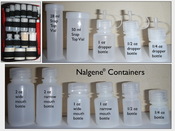
Nalgene
Bottles
Nalgene
bottles are strong, lightweight, and provide a excellent seal.
Use the narrow mouth bottles for liquids and the wide mouth
bottles for tablets, capsules, ointments, or dried herbs.
Choose from one, two, and four ounce containers. One ounce
bottles fit well, four to a row, in either of our sub-packs.
Larger bottles require more space and are suitable for group
first aid kits.
|
1 oz Wide Mouth
Bottle: $1.50 |
|
|
2 oz Wide Mouth Bottle:
$1.60 |
|
|
4 oz Wide Mouth Bottle:
$2 |
|
|
1 oz Narrow Mouth Bottle:
$1.25 |
|
|
2 oz Narrow Mouth Bottle:
$1.50 |
|
|
4 oz Narrow Mouth Bottle:
$ 1.75 |
|
|
|
|
|
|
|
|
|
|
|
WMTC Publications
Our staff and students are educated intelligent people who don't hesitate to offer their opinions. Each of the publications offered below were designed for, and are used in, our courses; they have stood the test of time. We are proud to offer our medical and risk management publications to the general public and welcome your feedback.
|
| |
the Art and Technique of Wilderness Medicine
The Art and Technique of Wilderness
Medicine is a state of the art text small enough, at 5.5 x
8.5 x 1/2 inches to be taken into the field. It is indexed
by contents, problems, and colored pages. Problems are broken
down into three major categories: trauma, environmental, and
medical. Decision making trees (algorithms) precede each major
section to help you identify possible problems quickly. Important
assessment and treatment information is bulleted. General
anatomy, physiology, and pathophysiology are discussed in
depth. Additional sections include: Basic Life Support, patient
assessment system, practical drug theory & tables, herbal
theory & tables, and patient SOAP notes. The cover is
laminated for durability. The spiral binding permits the book
to be opened to a page and remain there. The text is ideal
for those studying wilderness medicine.
| |
Art & Technique
of Wilderness Medicine: $25 |
 | | | |